Introduction
The search for exoplanets has entered a new era with the deployment of RAVEN, a powerful artificial intelligence system designed to mine data from NASA’s Transiting Exoplanet Survey Satellite (TESS). In a groundbreaking analysis, RAVEN has identified over 100 confirmed exoplanets—including 31 that were previously unknown—and flagged thousands of additional candidates for further study. Among these discoveries are some of the most extreme worlds ever observed: planets that complete an orbit in less than a day and others lurking in the so-called Neptunian desert, a region where astronomers expected few planets to exist. This article explores how RAVEN works, what it has found, and why these results are reshaping our understanding of planetary systems.
The TESS Mission and the Data Challenge
Launched in 2018, TESS surveys nearly the entire sky, monitoring the brightness of millions of stars. Its primary goal is to detect transits—the slight dimming that occurs when a planet passes in front of its host star. While TESS has been wildly successful, the sheer volume of data it produces overwhelms traditional analysis methods. Astronomers must sift through millions of light curves, distinguishing genuine planetary signals from instrument noise, stellar variability, and other artifacts. This is where RAVEN comes into play.
Meet RAVEN: The AI Planet Hunter
Developed by a team of researchers, RAVEN (short for Robust Automated Validation of Exoplanet Notifications) is a machine learning system trained to recognize the subtle signatures of transiting exoplanets. By feeding it millions of real and simulated TESS light curves, the AI learned to distinguish between true planetary transits and false positives with remarkable accuracy. Once trained, RAVEN was unleashed on the full TESS dataset, scanning stars across the sky. Its speed and precision allowed it to identify thousands of potential exoplanets in a fraction of the time a human analyst would require.
One of the key advantages of RAVEN is its ability to detect planets that might be missed by traditional algorithms—especially those with weak or ambiguous signals. This has led to the confirmation of over 100 exoplanets, including 31 that had never been cataloged before. Additionally, RAVEN has flagged more than 2,000 promising candidates awaiting confirmation via follow-up observations.
Confirmed Discoveries: Over 100 Exoplanets
The confirmed exoplanets span a wide range of sizes and orbital periods. Some are gas giants similar to Jupiter, while others are smaller, rocky worlds. The 31 new discoveries add to the growing census of planets beyond our solar system. But what truly excites astronomers are the rare and extreme worlds that RAVEN uncovered.
Ultra-Short-Period Planets
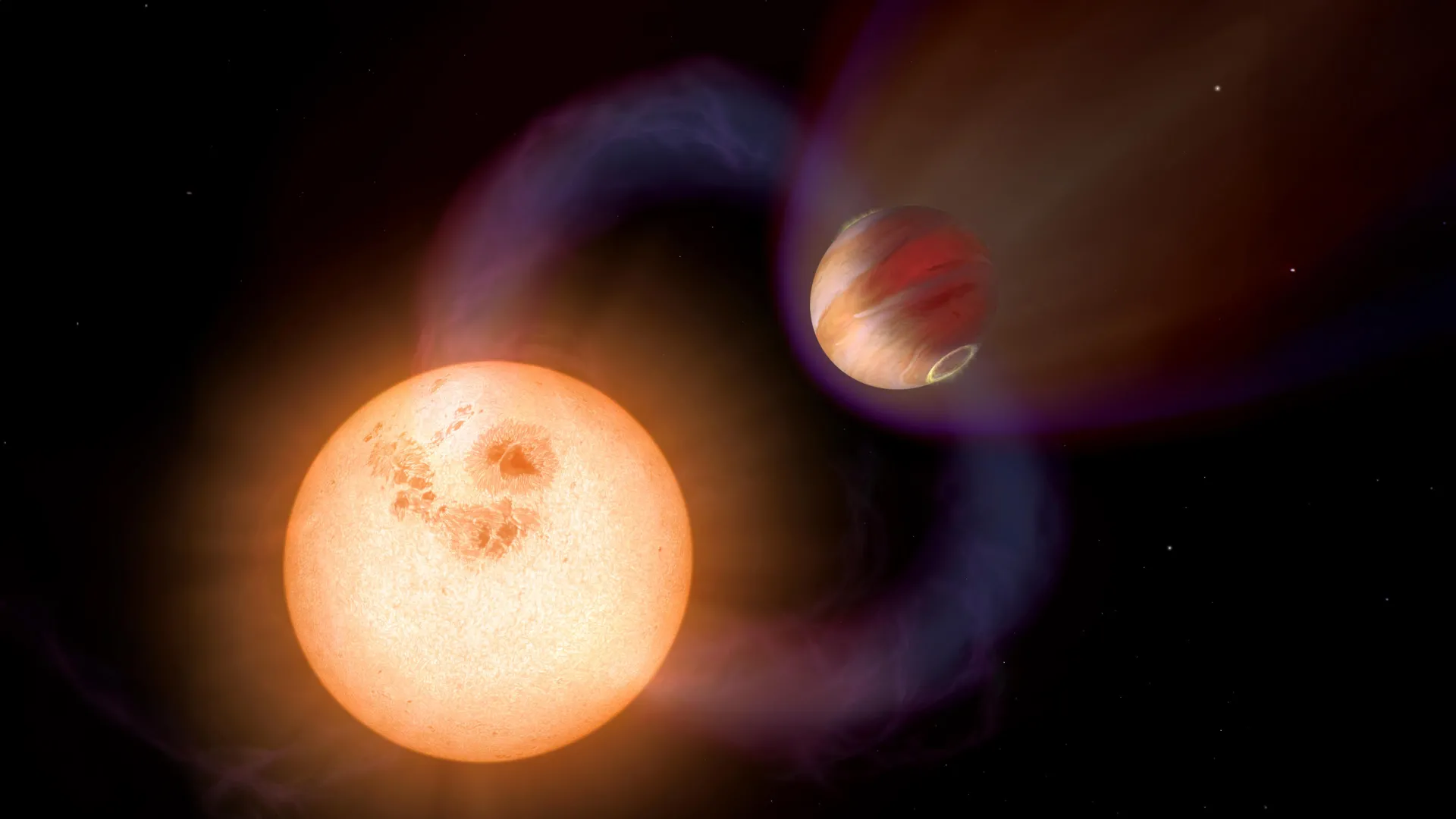
Among the most striking finds are planets that whip around their host stars in less than a day. These so-called ultra-short-period planets (USPs) are typically small, rocky worlds that orbit extremely close to their stars. Because of their tight orbits, they experience intense stellar radiation and often have molten surfaces. Finding USPs helps scientists understand how planets form and migrate in the inner regions of planetary systems.
The Neptunian Desert Mystery
Perhaps the most intriguing discovery is the presence of planets in the Neptunian desert—a region of parameter space where Neptune-sized worlds are rarely found. This desert lies between very short-period, Jupiter-like planets and longer-period, smaller planets. Theories suggest that such planets should be quickly eroded or stripped of their atmospheres by stellar radiation, making them scarce. Yet RAVEN has identified several exoplanets squarely within this desert, challenging existing models of planetary evolution.
- Why it matters: These worlds may have migrated inward after their star’s most active phase, or they may possess unusually dense cores that resist atmospheric loss.
- Next steps: Astronomers plan to observe these desert dwellers with telescopes like JWST to study their atmospheres and compositions.
Implications for Future Astronomy
The success of RAVEN demonstrates the transformative power of artificial intelligence in handling big data from space missions. As telescopes like TESS and the upcoming PLATO mission generate even more data, AI tools will become indispensable for rapid and accurate exoplanet detection. Moreover, the identification of rare planetary types—like those in the Neptunian desert—provides critical test cases for theories of planet formation and migration.
Already, the RAVEN team is working on an updated version that can incorporate additional data from ground-based follow-ups and Gaia astrometry. This next generation could refine the list of candidates and even detect planets that don’t transit, but instead reveal themselves through subtle stellar wobbles.
Conclusion
RAVEN’s haul of over 100 confirmed exoplanets, including 31 new worlds and extreme outliers, marks a major milestone in exoplanet science. It proves that AI can accelerate discovery while unearthing the most unexpected members of the cosmic zoo. As we continue to explore the galaxy, intelligent algorithms like RAVEN will be our guides, helping us find not just more planets, but the ones that rewrite the rules of planetary science.
For further reading, see the original announcement on NASA’s Exoplanet Exploration page.