Biotech startup Colossal recently unveiled a groundbreaking development in its mission to reverse extinction: an artificial eggshell that allows nearly complete avian embryonic development outside a natural shell. This innovation not only advances de-extinction efforts for birds but also solves a long-standing challenge in developmental biology. Below, we explore the details, implications, and remaining hurdles through a series of questions and answers.
What exactly did Colossal announce about the artificial eggshell?
On Tuesday, Colossal revealed that its researchers had successfully created an artificial eggshell—a specially designed container that replaces the natural shell within one to two days after an egg is laid. The team transferred the entire contents of a chicken egg into this container, where the embryo continued developing normally. Remarkably, healthy chicks emerged from this process, demonstrating that the artificial shell supports all critical stages of avian development. This breakthrough could streamline de-extinction efforts for birds by enabling scientists to manipulate embryos more freely without compromising viability.
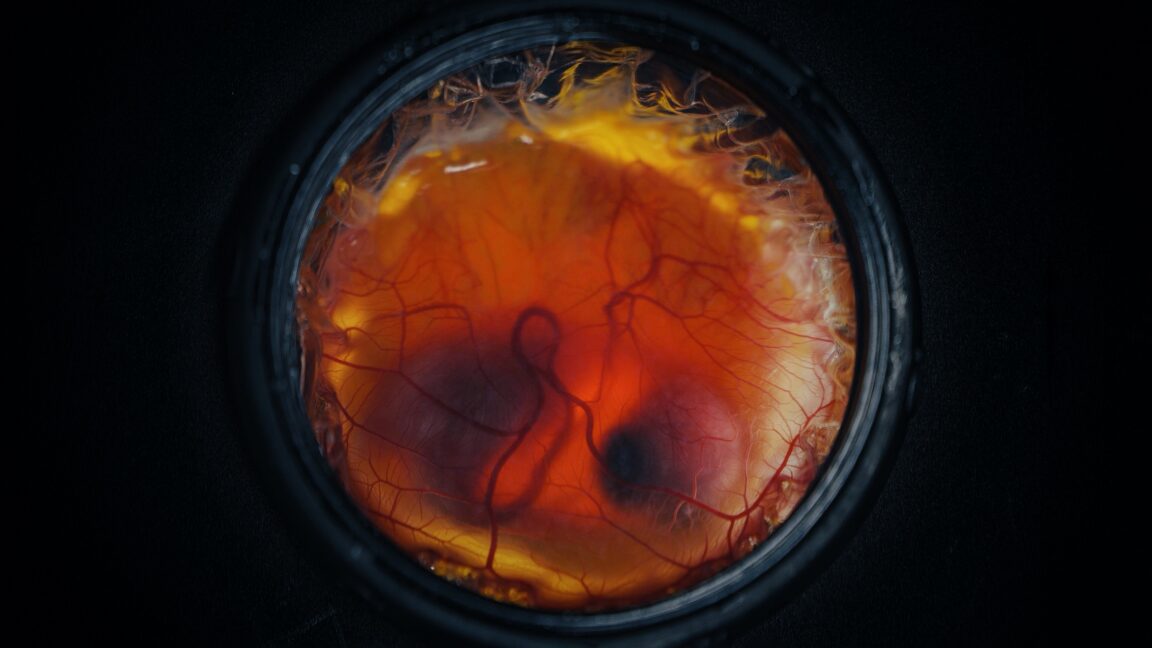
How does the artificial eggshell compare to traditional developmental research methods?
Traditional methods for studying chicken embryos involve carefully chipping a small hole in the shell, performing manipulations, and sealing it with tape. While effective, this technique is delicate, limits access, and risks harming the embryo. Colossal’s artificial eggshell eliminates these constraints by providing a fully transparent, durable, and resealable environment. Researchers can now observe and interact with the embryo much more easily throughout development. This solves a key problem that developmental biologists, including those studying chickens as a model for vertebrate development, have faced for decades.
Why is the artificial eggshell important for de-extinction of birds?
For reviving extinct avian species, scientists need to produce viable embryos from edited or cloned cells. However, birds develop inside hard eggshells that are sealed early on, making it challenging to introduce modified cells or monitor early growth. Colossal’s artificial eggshell allows the entire developmental process to occur externally, giving researchers continuous access to the embryo. This is crucial for techniques like somatic cell nuclear transfer (cloning) or gene editing, where cells must be inserted at precise stages. Yet significant hurdles remain before these methods can be applied to non-chicken species.
What long-standing research problem does this artificial eggshell solve?
The author, a former developmental biologist, notes that studying vertebrate development often requires manipulating embryos. Chickens are ideal because they develop outside the mother, but the eggshell itself is a barrier. Previously, scientists had to crack a tiny window in the shell, perform delicate experiments, and then seal it—risking infection or developmental issues. The artificial eggshell removes this bottleneck entirely. It provides a sterile, transparent, and fully accessible incubation chamber. This not only simplifies research but also opens up new possibilities for high-resolution imaging, drug testing, and genetic studies in avian embryos.
What key hurdles does Colossal still face before using this for de-extinction?
Despite the success with chickens, Colossal must overcome several obstacles. First, the artificial eggshell must be adapted to support the development of species with different egg sizes, shell properties, and incubation requirements. Second, the company needs to perfect the process of inserting edited or cloned cells into these artificial shells at the right developmental stage. Third, even if embryos develop normally, the resulting chicks must be healthy and capable of breeding. Finally, Colossal must navigate ethical and ecological challenges related to reintroducing extinct species into modern environments. The artificial eggshell is a critical tool, but it is only one piece of a much larger puzzle.
What are the broader implications of this technology beyond de-extinction?
Beyond reviving extinct birds, the artificial eggshell has potential applications in conservation, agriculture, and biomedical research. For conservation, it could help breed endangered bird species by allowing safe manipulation of embryos or surrogate incubation. In agriculture, it might improve poultry breeding by making genetic selection more precise. Biomedically, the system offers a superior model for studying embryonic development, drug effects, and birth defects. The ability to observe and intervene at every stage of avian development could accelerate discoveries in developmental biology and regenerative medicine.