Breaking: Open Protocol Promises Interchangeable, Reusable Content Blocks
A new open-source initiative called the Block Protocol is set to transform how web editors, note-taking apps, and content management systems handle content blocks, making them interchangeable across platforms for the first time. The protocol, released today in an early draft, aims to eliminate the proprietary fragmentation that forces each app to build blocks from scratch.
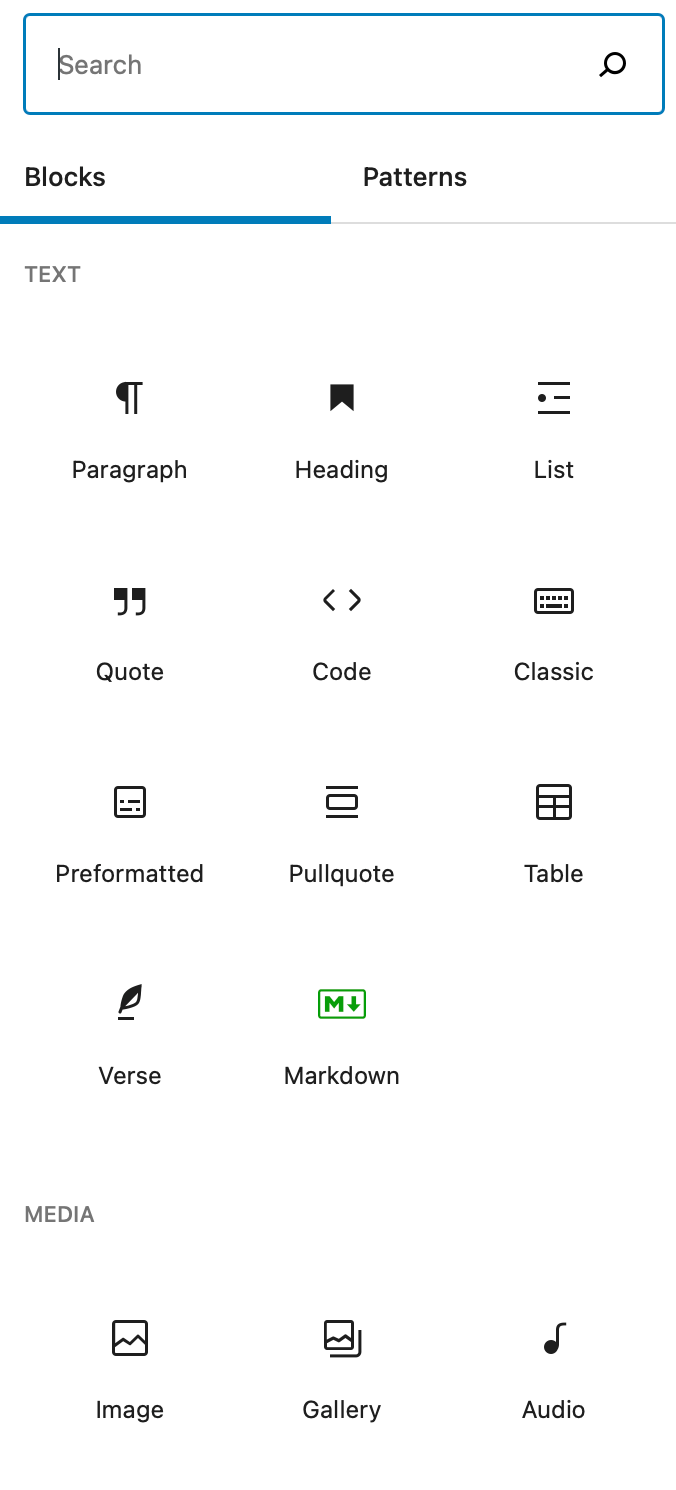
“Until now, every app that wants blocks has to implement them from scratch – a calendar, a Kanban board, an image gallery – you code it yourself,” said a spokesperson for the project. “This leads to inconsistent experiences and limits users to whatever blocks their specific editor supports.”
The Problem: Fragmented Block Ecosystems
While the / key to insert a new block has become a de facto standard across most tools, everything else remains completely proprietary. WordPress, Medium, Notion, and other platforms each have their own block systems, forcing developers to rebuild basic components like paragraphs, lists, tables, and diagrams.
“As a result, end-users suffer,” the spokesperson explained. “If someone uses my blog engine, they can only use those blocks I had time to implement. They may be basic or incomplete. Users can’t share blocks between platforms or move them easily.”
Background
The block-based editing paradigm has exploded in popularity, with most modern web editors adopting a “insert block” user interface. However, this has created a Tower of Babel scenario where each tool reinvents the wheel. The Block Protocol aims to solve this by defining a standard way for embedding applications to communicate with blocks.
“It’s just a protocol that embedding applications can use to embed blocks,” the team stated. “Any block can be used in any embedding application if they all follow the protocol.” The initiative is open, free, and non-proprietary, with all sample code released under open-source licenses.
What This Means
For app developers, the protocol promises a huge reduction in development time. Instead of coding dozens of block types, they can write embedding code once and instantly support a rich variety of block types from a growing open-source library. For users, it means access to the best blocks – whether from WordPress, Notion, or custom developers – regardless of which editor they choose.

“Anything that makes sense in a document can be a block: a paragraph, list, table, diagram, or a Kanban board,” the team noted. “Anything on the web: an order form, a calendar, a video. Anything that lets you interact with structured data.” Early examples include simple blocks for text, images, and interactive components.
Next Steps and Community Call
The team has released an early draft and is actively seeking contributions. They’ve built a few simple blocks and a basic editor to demonstrate the protocol in action. “We’re hoping to foster an open-source community that creates a huge library of amazing blocks,” the spokesperson added.
Developers and platform owners are encouraged to review the protocol and consider integrating it. The long-term goal is to make blocks as universally accessible as web links, fundamentally changing how content is created and shared online.
For more details, visit the official Block Protocol website.
- Key benefit: Write a block once; use it anywhere.
- Licensing: 100% free and open-source.
- Current status: Early draft released; community building underway.