Introduction: The Challenge of Efficiency at Planetary Scale
When your platforms serve over three billion users daily, even a 0.1% performance regression can translate into megawatts of wasted energy. For Meta’s infrastructure team, maintaining efficiency isn’t just a cost-savings exercise—it’s a fundamental operational necessity. To tackle this, Meta has developed a unified AI agent platform that automates the detection and remediation of performance issues across its hyperscale data centers. This system encodes decades of domain expertise from senior efficiency engineers into reusable, composable skills, enabling the company to recover hundreds of megawatts of power—equivalent to powering hundreds of thousands of American homes for a year—without proportionally increasing headcount.
Understanding the Two Sides of Capacity Efficiency
Meta’s Capacity Efficiency Program operates on two complementary axes: offense and defense. Both are critical for sustaining growth while minimizing energy consumption.
Offense: Proactive Optimization
The offensive side involves continuously scanning the codebase and infrastructure for opportunities to reduce resource usage. Engineers proactively identify and implement changes that make systems more efficient—whether by optimizing algorithms, reducing memory footprints, or streamlining data flows. However, the volume of potential wins far exceeds what human engineers can manually address. Each half, AI-assisted opportunity resolution expands to new product areas, handling a growing volume of optimizations that would otherwise remain untapped.
Defense: Regression Detection and Mitigation
On the defensive side, Meta relies on FBDetect, its in-house regression detection tool, which flags thousands of performance regressions every week. A regression might be a subtle code change that increases CPU usage or memory consumption across the fleet. Without rapid automated resolution, even minor regressions compound and waste megawatts over time. By automating root-cause analysis and mitigation, the platform shrinks the window between detection and fix from hours to minutes.
How the AI Agent Platform Works
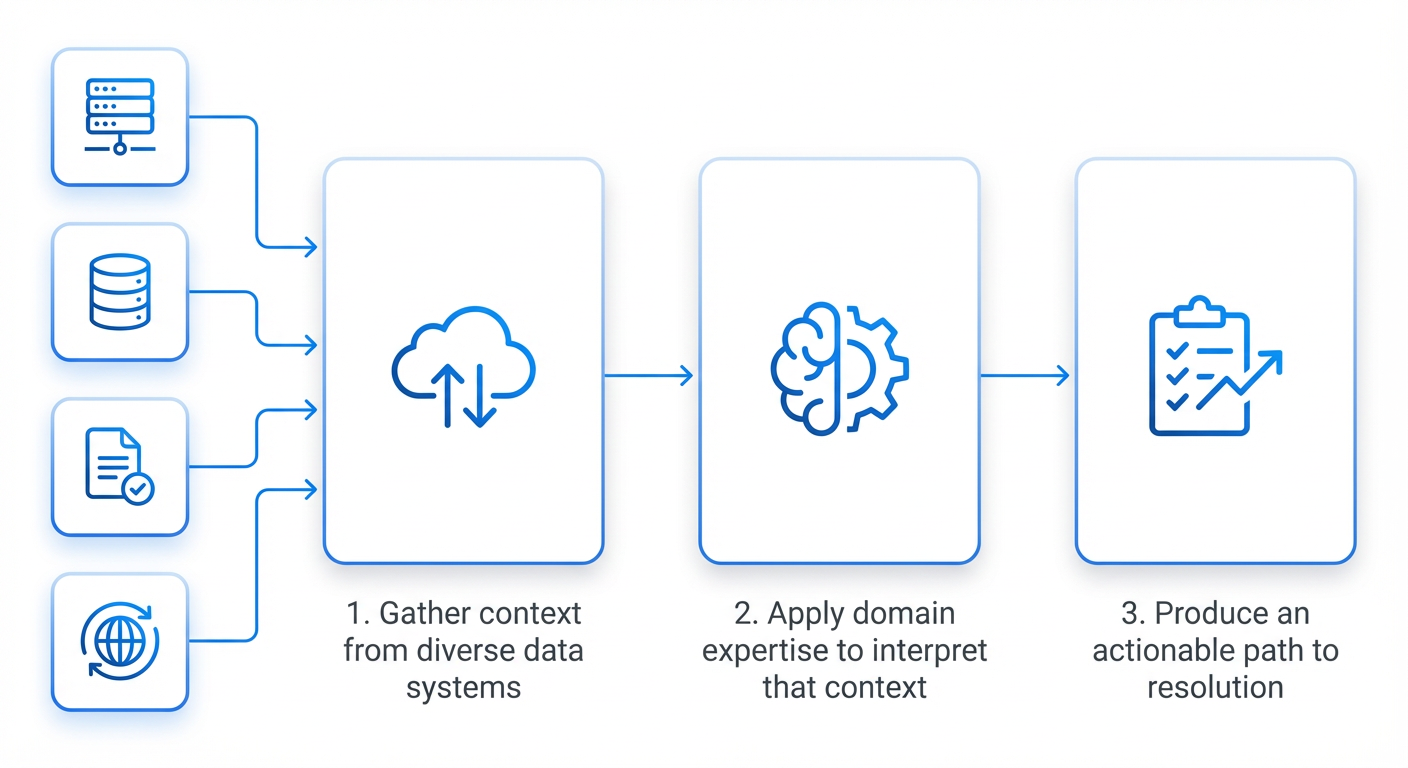
The core of the system is a unified platform where standardized tool interfaces combine with encoded domain expertise. Agents are built from reusable skills that encapsulate best practices for diagnosing specific types of regressions or identifying optimization opportunities. These skills can be composed into larger workflows, allowing the platform to handle diverse scenarios—from a sudden CPU spike in a data center to a memory leak in a long-running service.
When a regression is detected, an AI agent automatically begins investigation: it accesses logs, traces, and performance metrics, narrows down the likely root cause to a specific pull request, and often generates a ready-to-review fix. What used to take a senior engineer roughly ten hours of manual work can now be completed in about thirty minutes—a 20x improvement. Similarly, for offensive optimizations, the platform surfaces opportunities, evaluates their impact, and can even produce a draft change for human review.
Real-World Impact: Megawatts Saved and Time Reclaimed
The numbers speak for themselves:
- Hundreds of megawatts of power have been recovered, enough to power a small city.
- Manual investigation time compressed from 10 hours to 30 minutes for typical regression cases.
- The program scales MW delivery across a growing number of product areas without requiring a proportional increase in engineering headcount.
These gains free up engineers to focus on innovation rather than firefighting. The ultimate vision is a self-sustaining efficiency engine where AI handles the long tail of performance issues, both defensive and offensive, while humans steer the strategy and handle novel challenges.
Internal Anchor Links for Navigation
To help readers jump to relevant sections, here are quick anchors:
Looking Ahead: The Path to a Self-Sustaining Engine
Meta’s AI agent platform is not static. As the platform learns from each resolved regression or optimization, its knowledge base grows. Future iterations will incorporate more advanced reasoning, allowing agents to handle increasingly complex scenarios without human intervention. The end goal remains a system that can autonomously maintain a hyperscale infrastructure at peak efficiency, with humans providing oversight and direction only when necessary.
By combining encoded domain expertise with standardized, composable tooling, Meta is proving that AI can not only help maintain efficiency at unprecedented scale but can do so in a way that continuously improves over time. This is the blueprint for how the largest digital platforms can sustain growth while minimizing environmental impact.