Meta has successfully untangled itself from a multiyear technical debt, migrating over 50 real-time communication use cases away from a divergent WebRTC fork to a modular, continuously updated architecture.
The social media giant revealed how it overcame the so-called 'forking trap' – a common industry problem where internal modifications to open-source projects become increasingly difficult to merge with upstream changes. With this breakthrough, Meta can now A/B test each new upstream WebRTC release before rolling it out across its platforms, ensuring stability for billions of users.
Challenge: The Static Linker and the Monorepo
Upgrading a library like WebRTC is inherently risky, especially when serving billions of users across diverse devices. A one-time upgrade could cause regressions that are hard to rollback. 'We needed A/B testing capabilities to run the legacy version alongside the new one in the same app,' said a Meta engineer. However, statically linking two versions of the same library violates the C++ linker One Definition Rule (ODR), causing thousands of symbol collisions.
Meta solved this by building a dual-stack architecture that allows two WebRTC versions to coexist in the same address space. This enables safe, dynamic switching between versions for each user session, without breaking the build or inflating binary size.
Background: The Forking Trap
WebRTC is a massive open-source project that powers real-time audio and video on Messenger, Instagram, Cloud Gaming, and VR casting on Meta Quest. Over time, Meta's internal fork drifted upstream, accumulating proprietary optimizations and bug fixes. Merging community commits became prohibitively expensive. 'The fork started with good intentions – a quick fix – but years later we were essentially maintaining our own parallel WebRTC,' the engineer explained.
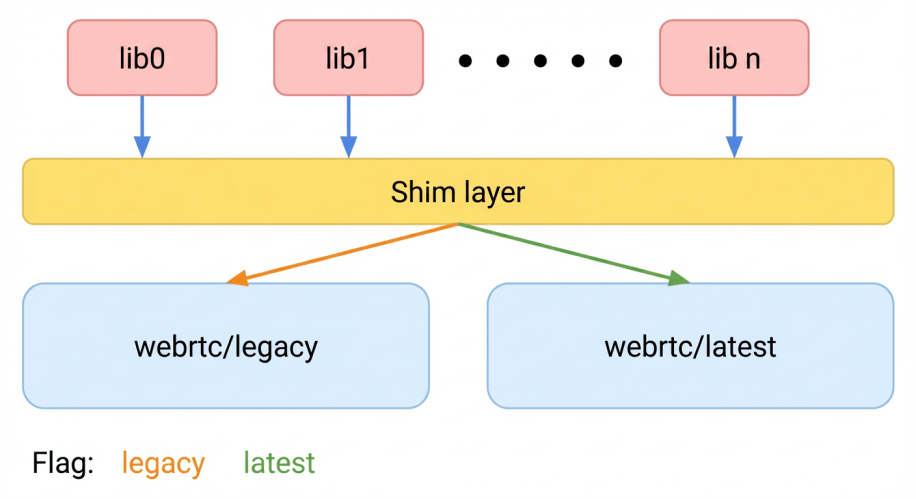
The migration involved moving all 50+ use cases from the fork to a modular architecture that uses the latest upstream version as a skeleton, with Meta's own implementations injected for key components. This approach reduces security risks, improves performance, and cuts binary size.
What This Means
For Meta, this means faster rollout of new WebRTC features, better performance, and enhanced security. Users will benefit from fewer video call dropouts and lower latency, especially on diverse devices. Industry-wide, Meta's solution demonstrates a viable path for other large tech companies stuck with outdated open-source forks. 'If you're maintaining a permanent fork of any major library, you're accumulating technical debt that will eventually cripple your velocity,' the engineer warned. 'Our approach breaks that cycle.'
The company plans to continue using its dual-stack A/B testing workflow for each new upstream release, ensuring that Meta's real-time communication remains robust and cutting-edge.