Introduction
Quantum computers are advancing rapidly, and experts predict they will eventually break today’s public-key encryption methods. That isn’t a distant threat—adversaries are already collecting encrypted data under a “store now, decrypt later” (SNDL) strategy, hoping to unlock it once quantum decryption becomes feasible. To protect sensitive information, organizations must begin transitioning to post-quantum cryptography (PQC) now. The U.S. National Institute of Standards and Technology (NIST) has published initial PQC standards such as ML-KEM (Kyber) and ML-DSA (Dilithium), with more algorithms like HQC (co-authored by Meta cryptographers) on the way. Meta has already started deploying PQC across its internal infrastructure, and this guide distills key lessons into a step-by-step framework to help other organizations navigate their own migration—effectively, efficiently, and economically.

What You Need
- Leadership buy-in – A clear mandate from executives to allocate time, budget, and personnel for PQC migration.
- Cryptographic inventory tools – Automated scanners, dependency analyzers, and configuration management databases to catalog every system using public-key cryptography.
- Awareness of PQC standards – Familiarity with NIST’s ML-KEM, ML-DSA, and upcoming algorithms like HQC. Understanding hybrid approaches (classic + PQC) is beneficial.
- Risk assessment methodology – A framework to evaluate SNDL risk, data sensitivity, and system criticality.
- Cross-functional team – Engineers, security architects, product managers, and compliance officers to cover all aspects of migration.
- Testing environment – Sandboxes, staging servers, and continuous integration/continuous deployment (CI/CD) pipelines for safe validation.
Step-by-Step Migration Guide
Step 1: Assess Risk and Define PQC Migration Levels
Begin by evaluating which systems face the highest SNDL risk. Consider data sensitivity, exposure to adversaries, and how long secrets must remain confidential. Use a tiered system—Migration Levels—to categorize use cases:
- Level 1 (Critical) – Long-lived secrets, financial transactions, government communications. Immediate priority.
- Level 2 (High) – Medium-term stored data, internal authentication protocols. Migrate within 2–3 years.
- Level 3 (Standard) – Short-lived sessions, low-sensitivity data. Phase in over 4–6 years.
This approach lets you manage complexity by tackling the most urgent systems first.
Step 2: Take a Comprehensive Cryptographic Inventory
You can’t secure what you don’t know. Catalog every system, service, and library that relies on public-key cryptography (RSA, ECC, Diffie-Hellman, etc.). Use automated discovery tools to scan certificates, TLS configurations, code dependencies, and hardware security modules. For each item, record the algorithm, key size, usage context, and data sensitivity. Prioritize systems that handle user data, session tokens, and long-term storage. Meta found that a thorough inventory was essential to avoid missing hidden dependencies (e.g., third-party libraries or legacy endpoints).
Step 3: Develop a Phased Integration Plan
With your inventory and risk levels in hand, draft a roadmap. Start with ML-KEM for key encapsulation and ML-DSA for digital signatures—both are NIST-approved and widely supported. For extra safety, consider hybrid configurations that combine classic cryptography (e.g., X25519) with PQC algorithms. This way, even if one algorithm is later broken, the other still protects your data. Map each system to the appropriate algorithm(s) and define migration deadlines based on your risk levels. Include milestones for testing, validation, and rollback procedures.
Step 4: Deploy and Test in Isolated Environments
Never push PQC changes directly to production without rigorous testing. Use staging environments that mirror your real infrastructure. Test for:
- Interoperability – Ensure both PQC and classic crypto clients can communicate during the transition.
- Performance impact – PQC algorithms may be slower or require more bandwidth; measure latency, CPU usage, and packet size.
- Failure scenarios – What happens if a PQC handshake fails? Graceful fallback to classic crypto may be necessary.
Run load tests, fuzzing, and long-term stability tests. Meta recommends a gradual rollout—start with a small subset of services, monitor closely, and expand only after confirming stability.
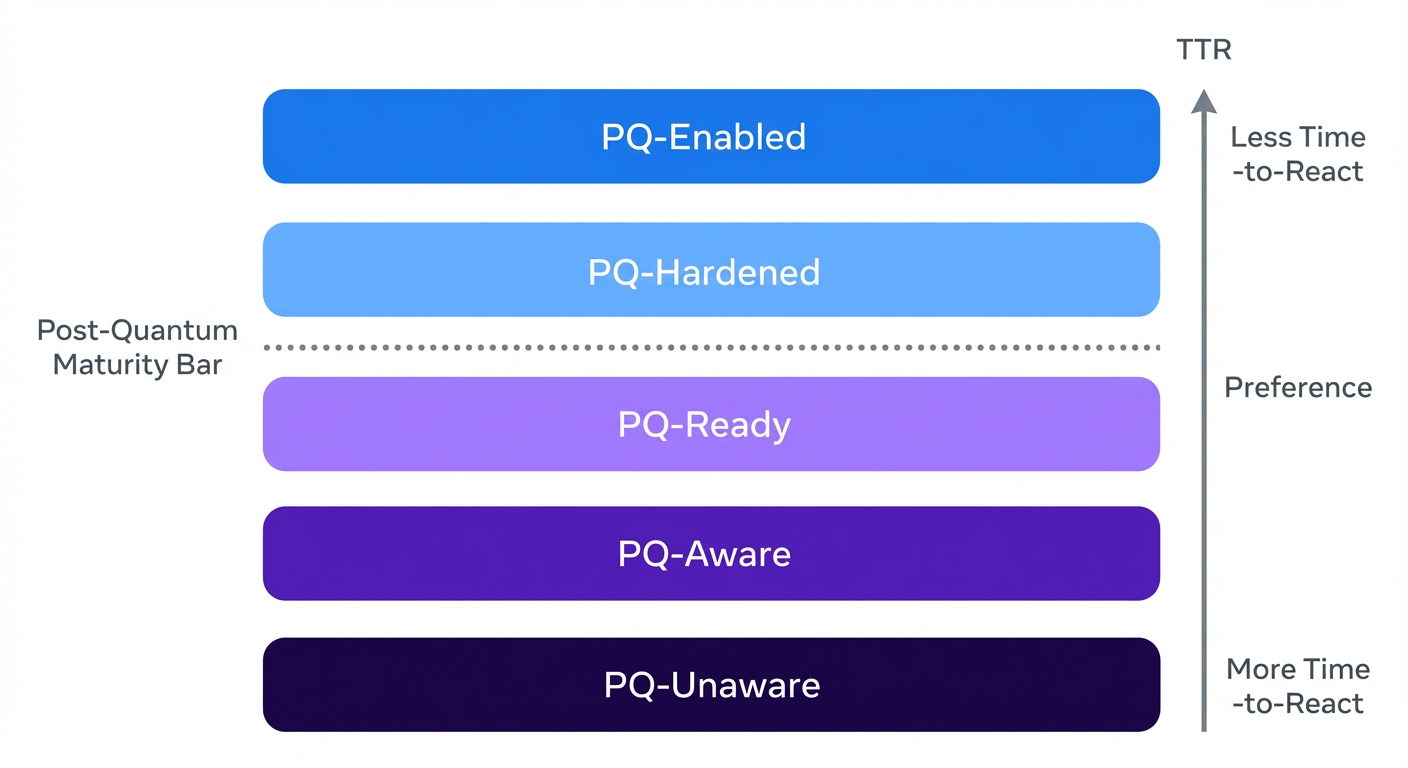
Step 5: Implement Guardrails and Continuous Monitoring
After deployment, establish permanent guardrails to maintain PQC security:
- Automated compliance checks – Block new deployments that don’t include PQC-supporting configurations.
- Real-time monitoring – Detect deprecated crypto usage, unexpected fallbacks, or misconfigurations.
- Deprecation schedule – Gradually remove support for older algorithms once all systems have migrated to PQC.
Use dashboards to track migration progress across levels. Meta observed that guardrails prevented regressions and kept teams accountable during the multi-year process.
Step 6: Learn, Document, and Iterate
Post-quantum cryptography is still evolving. NIST will publish additional algorithms (like HQC), and new attacks may emerge. Treat your migration as a living process:
- Document lessons from each phase—what worked, what failed, performance trade-offs.
- Share findings with the broader community (e.g., industry working groups, open-source projects).
- Review and update your migration levels and algorithm choices every 12–18 months.
By adopting a continuous improvement mindset, your organization can stay ahead of both quantum threats and standard updates.
Tips for a Smooth PQC Migration
- Start early – Even if quantum computers are a decade away, SNDL attacks are happening now. Migrating critical systems as soon as possible reduces risk.
- Embrace hybrid cryptography – Using both classic and PQC algorithms provides backward compatibility and a safety net while standards mature.
- Involve your whole team – Security engineers, product managers, and legal/compliance must collaborate to address technical and regulatory requirements.
- Test, test, test – PQC algorithms can have surprising performance characteristics. Extensive testing in staging prevents production surprises.
- Leverage industry resources – Use NIST’s guidance, Meta’s open-source tools, and community forums to avoid reinventing the wheel.
- Plan for rollback – Every deployment should have a rollback plan in case of unforeseen issues.
Migrating to post-quantum cryptography is a complex but essential journey. By following this step-by-step framework and learning from Meta’s experience, your organization can protect sensitive data against tomorrow’s quantum threats—starting today.